Can You Copyright an AI-Generated Video? A Creator’s Guide
Can you copyright an AI-generated video? Learn what human contributions may be protected and how to build a practical evidence pack across the US, EU, and Japan.
Published
Updated
Topic: AI Ethics, Provenance & Policy
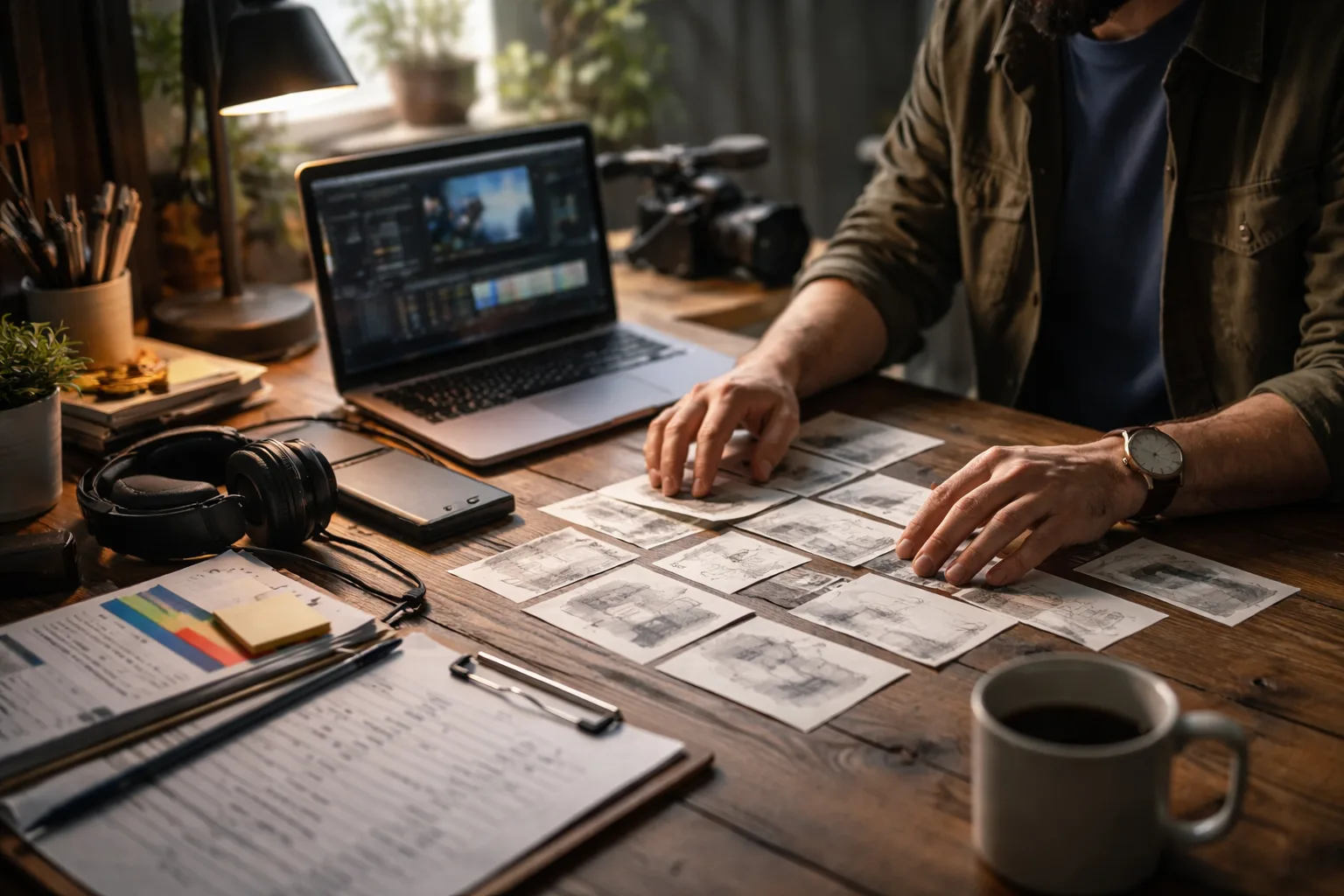
The question “can you copyright an AI-generated video?” does not have a simple yes-or-no answer. Copyright protection may depend on the creative work a human contributed, how much of the final expression came from an AI system, the law in the relevant country, and the terms of the platform used to generate or edit the footage. For creators, the safest approach is to treat authorship as a production record: preserve the decisions, revisions, selections, edits, and original assets that show where human creativity shaped the finished video.
This article is a practical framework rather than legal advice. It focuses on creators, agencies, marketers, and small businesses publishing or licensing AI-assisted video in the United States, the European Union, or Japan. Copyright rules differ across those jurisdictions, and a contract, employment arrangement, client agreement, or platform license can affect rights independently of copyright.
The key distinction: AI output versus human contribution
A useful starting point is to separate the raw AI output from the human-authored parts of the project. A prompt alone may or may not establish enough creative control, depending on its specificity, the system’s role, and the surrounding process. By contrast, a creator’s original script, storyboard, recorded narration, custom music, shot order, pacing, compositing, color treatment, and editorial structure may provide identifiable human contributions even when some visual frames came from a model.
Measured on TryVeo's own production render logs over the last 90 days (443 completed renders with full timing, as of 2026-09-14). Wall-clock from job start to finished file, so provider queueing is included. These are our own measurements, not vendor claims.
| Model | Median render | 90th percentile | Renders measured |
|---|---|---|---|
| veo-3.1-fast-generate-preview | 88s | 128s | 299 |
| seedance-2.0-fast | 195s | 343s | 74 |
| kling-2.5-turbo | 132s | 155s | 19 |
| seedance-2.0 | 309s | 405s | 19 |
| veo-3.1-generate-preview | 101s | 166s | 32 |
The U.S. Copyright Office’s report on copyright and artificial intelligence explains the United States position that human authorship is essential for copyright protection. It also addresses works containing AI-generated material: where the AI material is more than minimal, an applicant should disclose it and briefly describe the human author’s contribution when seeking registration. That means a video can contain both material that is not independently protected and human-created elements that may be considered separately or as part of an original arrangement.
The important question is therefore not only “Which tool made this clip?” but also “What creative expression did the human creator control and fix in a tangible final work?” A creator who simply accepts one generated result has a weaker authorship record than one who develops a concept, directs a sequence of shots, rejects many alternatives, combines original assets, and performs substantial editing. These actions do not by themselves establish protection, but they make the human contribution easier to identify and explain.
How the United States, EU, and Japan frame the issue
In the United States, the human-authorship requirement is the central practical constraint. A registration application should not present AI-generated material as though a person created every expressive element. Instead, identify the human-authored content and disclose the AI-generated portions when the material is more than de minimis. Keep the application’s description accurate and focused on the parts for which the claimant is asserting rights.
The European Commission’s IP Helpdesk takes a similarly fact-specific approach. Its European intellectual property FAQ says outputs are more likely to be protectable when AI functions as an extension of human capabilities, including through detailed prompting, iterative refinement, or significant editing, provided human authorship predominates. This is useful guidance for production planning, but it should not be treated as a single EU-wide registration test. National law, the facts of the project, and contractual terms can still matter.
Japan requires particular caution against importing a U.S. or European conclusion without checking the local context. Japan’s Agency for Cultural Affairs has assembled an official framework on AI and copyright while acknowledging that accumulated judicial precedent involving generative AI and copyright remains limited. The agency’s AI and copyright resource is therefore a useful reference for understanding the Japanese discussion, but uncertain precedent means creators should avoid categorical claims about whether a particular workflow is protected.
Across all three markets, keep two questions separate. First, does copyright subsist in the human-authored contribution or final arrangement? Second, do you have permission to use the platform, model, source assets, voices, music, and likenesses in the way your project requires? A platform’s commercial-use clause may grant a contractual license or allocate certain rights, but it cannot automatically turn purely machine-generated material into human-authored expression. Conversely, copyright in your editing does not by itself give you permission to use an unlicensed song or another person’s voice.
Build a human-authorship evidence pack
The strongest workflow is to preserve evidence while you work, not reconstruct it after a dispute. Create one project folder with dated exports, source files, and a short authorship log. The aim is not to claim that every pixel or frame was made by a person. The aim is to show, clearly and honestly, how human decisions shaped the protectable contribution and the final editorial work.
- Record the concept and brief. Save the treatment, script, storyboard, shot list, mood board, audience objective, and any client instructions that you wrote or materially developed.
- Preserve prompts and settings. Store prompts, negative prompts, reference-image descriptions, model names, generation modes, dates, aspect ratios, seeds when available, and relevant version information. Do not rely on a screenshot alone if the platform can provide an export or project history.
- Keep meaningful iterations. Save rejected generations and explain why you rejected them. Note changes to camera direction, character action, composition, timing, tone, continuity, or visual style rather than saving only the final result.
- Document selection and sequencing. Record which clips you selected, which portions you trimmed, and how you arranged shots to create a narrative, argument, rhythm, or emotional progression.
- Preserve editing and compositing work. Keep the timeline, project file, masks, transitions, speed changes, keyframes, color decisions, visual effects, overlays, subtitles, graphics, and composited original materials.
- Track sound decisions. Identify original dialogue, licensed music, commissioned music, generated audio, sound effects, silence, mixing, and synchronization choices. Keep licenses and talent permissions with the project.
- Export milestones. Save a rough cut, picture lock, final master, captions, and delivery versions with dates. A sequence of drafts can demonstrate how the finished expression developed.
- Write a short authorship statement. In plain language, list the human-created assets and the human creative decisions that materially shaped the final video, while identifying AI-generated components separately.
For a team project, add contributor names and responsibilities. Identify who wrote the script, directed the visual approach, selected generations, edited the sequence, created graphics, recorded audio, and approved the final cut. Agencies should retain client approvals and statements of work; freelancers should clarify whether they are delivering footage, an edited work, or a broader package of rights.
Prompts are evidence, not the entire authorship claim
Detailed prompts can help demonstrate direction, especially when they specify subject placement, lens language, lighting, action, continuity, timing, and relationships between shots. But a prompt log is more persuasive when paired with iteration and editing evidence. A long prompt followed by an untouched output does not necessarily show control over every expressive detail. Conversely, a shorter prompt followed by careful selection, correction, compositing, and editorial shaping may show a substantial human contribution.
Separate copyright, contracts, and provenance
A rights review should cover at least four layers: the human-authored contribution, the AI output, the input materials, and the platform agreement. Check whether reference images, stock footage, fonts, music, voice recordings, trademarks, or personal likenesses have restrictions. If a client supplies assets, record the client’s permission and any limits on territory, media, duration, exclusivity, or modification.
Then read the platform’s current terms for output ownership, commercial use, training permissions, user submissions, account rights, indemnities, attribution, and changes to the service. Save the version or date you reviewed. This contract review answers a different question from copyrightability: it may tell you what use the service permits, while copyright law determines what rights arise in the resulting material. Neither document replaces clearance for third-party content.
Provenance records can support transparency without overstating ownership. For a deeper operational guide, see TryVeo’s article on C2PA Content Credentials for AI Content Creators. If your video includes synthetic voices or a real person’s voice, use a documented consent process; the related AI voice cloning consent checklist can help separate permission questions from copyright analysis.
A release checklist before publishing or licensing
- Write down the jurisdiction and commercial purpose you are evaluating; do not assume a result travels unchanged from the United States to the EU or Japan.
- Mark each major element as human-created, AI-generated, third-party, licensed, commissioned, or uncertain.
- Confirm that the final edit file and dated exports are preserved, including the timeline and important source assets.
- Prepare an accurate AI disclosure for a registration application, client file, platform submission, or audience-facing transparency notice when appropriate.
- Review model and platform terms as they apply to the actual account, plan, date, output, and intended use.
- Obtain permissions for music, voices, likenesses, locations, trademarks, stock content, and client-supplied material.
- Have local counsel review higher-risk projects, especially those involving exclusivity, valuable licensing, recognizable people, regulated advertising, or a dispute.
Disclosure is not the same as surrendering every possible right. An honest notice can explain that generative tools were used while identifying the human work that shaped the final result. For guidance on audience-facing language and placement, see How to Disclose AI-Generated Videos Clearly in 2026. Also consider accessibility: captions, audio description, and readable contrast can improve the usefulness of an AI-assisted video without changing the underlying copyright analysis. TryVeo’s guide to making AI-generated videos accessible covers that production layer.
What creators should remember
The safest answer to “Can you copyright an AI-generated video?” is: you may be able to protect the human-authored contribution and the original human arrangement, but you should not assume that every AI-generated element receives the same protection. The result depends on the facts, jurisdiction, and applicable agreements. Build your project so that a reviewer can see the human creative chain from brief to final master.
A disciplined evidence pack does more than support a possible copyright filing. It helps prove what your team actually made, supports client handover and licensing conversations, exposes unlicensed inputs before publication, and preserves a credible provenance trail. When the law is unsettled—as the Japanese official framework recognizes—careful records and precise claims are more reliable than a blanket statement that an AI tool either owns or eliminates all rights in a video.
Sources
- Copyright and Artificial Intelligence, Part 2 Copyrightability Report, United States Copyright Office — The Guidance reiterated the Office’s longstanding position that human authorship is an essential requirement for copyright protection in the United States. If a work contains more than a de minimis amount of AI-generated material, the applicant should disclose that information and provide a brief statement describing the human author’s contribution.
- Europe - Frequently Asked Questions - IP Helpdesk, European Commission — When AI tools serve merely as an extension of human capabilities (e.g., through detailed prompting, iterative refinement, or significant editing) the resulting output is likely copyright-protectable, provided human authorship predominates.
- AIと著作権について, 文化庁 — 生成AIと著作権の関係に関する判例及び裁判例の蓄積がないという現状を踏まえて、生成AIと著作権に関する考え方を整理し、周知すべく、文化審議会著作権分科会法制度小委員会において、有識者へのヒアリングやパブリックコメントの募集等を実施しながら議論を行い、「AIと著作権に関する考え方について」を取りまとめました。